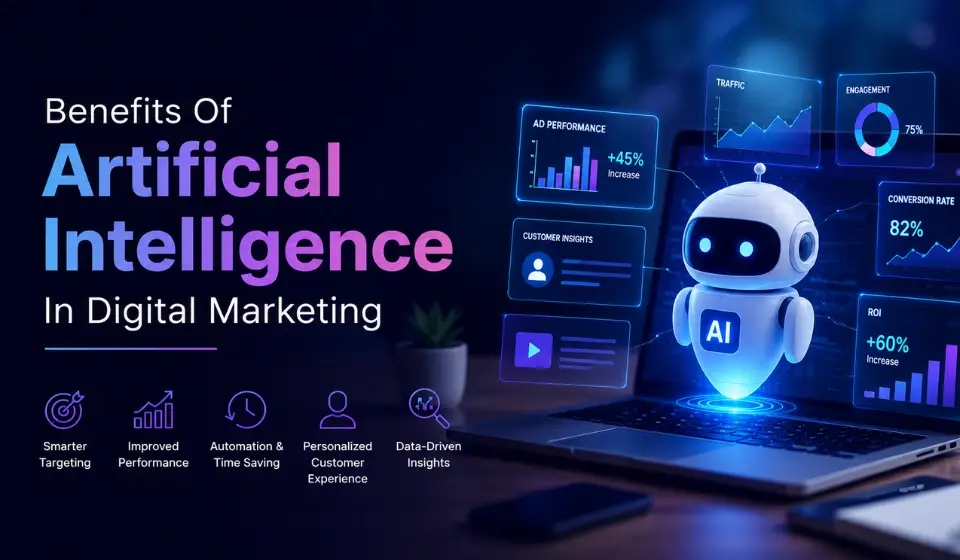
Benefits Of Artificial Intelligence In Digital Marketing
The rise of artificial intelligence has reshaped how brands plan campaigns, understand customers, and measure results, and AI in digital marketing is now a practical, everyday tool rather than a futuristic buzzword. In this blog, we will explore the biggest benefits of AI in digital marketing and look at where current AI marketing trends are heading, so you can see exactly why using AI in digital marketing has become essential for businesses of every size.
What Is AI In Digital Marketing?
At its core, AI in digital marketing refers to the use of machine learning, natural language processing, and predictive analytics to plan, execute, and optimize marketing efforts. Instead of relying purely on human intuition or manual data crunching, marketers now lean on intelligent systems that can process massive amounts of information in seconds.
Using AI in digital marketing typically involves tools that can:
Analyze customer data and behavior patterns
Predict future trends based on historical performance
Automate routine tasks like ad bidding or email scheduling
Generate content ideas, drafts, or optimization suggestions
Personalize messaging for individual users at scale
A Quick Shift In Perspective
Automating Campaigns and Improving Efficiency
It helps to think of AI not as a replacement for marketers, but as an assistant that handles the heavy lifting. The strategy, creativity, and brand voice still come from people. AI simply makes execution faster and smarter.
Personalized Customer Experiences Powered By AI
Customers today expect brands to understand them. Generic, one size fits all marketing simply does not perform the way it used to. This is where AI shines.
By analyzing browsing history, purchase behavior, and engagement patterns, AI systems can build a detailed picture of what each customer actually wants. This allows businesses to deliver experiences that feel tailored rather than mass produced.
Some common examples include:
Product recommendations that update based on real time browsing behavior.
Website content that changes depending on visitor interests.
Email campaigns segmented down to individual preferences rather than broad categories.
The result is stronger engagement. When people feel like a brand understands them, they are far more likely to stay loyal, click through, and convert. This is one of the most immediate and measurable benefits of AI in digital marketing.
AI-Driven Data Analysis & Smarter Decision Making
Marketers have never had a shortage of data. The real challenge has always been making sense of it quickly enough to act on it. AI solves this problem by processing enormous datasets far faster than any human team could manage manually.
Predictive Analytics
One of the most powerful applications is predictive analytics. AI models can study past customer behavior and forecast future actions, such as who is likely to make a purchase, who might churn, or which products will trend next season.
Real-Time Insights
Rather than waiting for weekly or monthly reports, marketers can now access real time dashboards that highlight what is working and what needs adjustment. This allows for quicker pivots and better use of ad spend.
In short, AI takes raw numbers and turns them into decisions marketers can actually use, reducing guesswork and improving overall return on investment.
Time is one of the most valuable resources in any marketing team, and AI has proven especially good at giving that time back. Tasks that once required constant manual attention can now run largely on autopilot.
Here is where automation makes the biggest difference:
Chatbots and customer support: AI powered chatbots handle common queries instantly, freeing up human agents for more complex issues.
Ad bidding and budget allocation: Machine learning algorithms adjust bids in real time to get the most value from every dollar spent.
Content scheduling: Social media and email tools now use AI to determine the best times to post based on audience activity.
Lead scoring: AI can rank leads based on their likelihood to convert, helping sales teams prioritize effectively.
This kind of automation does not just save time. It also reduces human error and ensures campaigns run consistently, even outside business hours.
AI in Content Creation & SEO Optimization
Content and search engine optimization have also been transformed by AI marketing trends. Writing, researching, and optimizing content used to be a slow, manual process. Today, AI tools assist at nearly every stage.
Content Ideation & Drafting
AI can analyze what topics are trending, what questions people are asking, and what competitors are publishing. This helps marketers generate content ideas that are far more likely to resonate with their audience. Many teams also use AI to speed up first drafts, which are then refined and polished by human writers to keep the brand voice authentic.
Smarter SEO Strategy
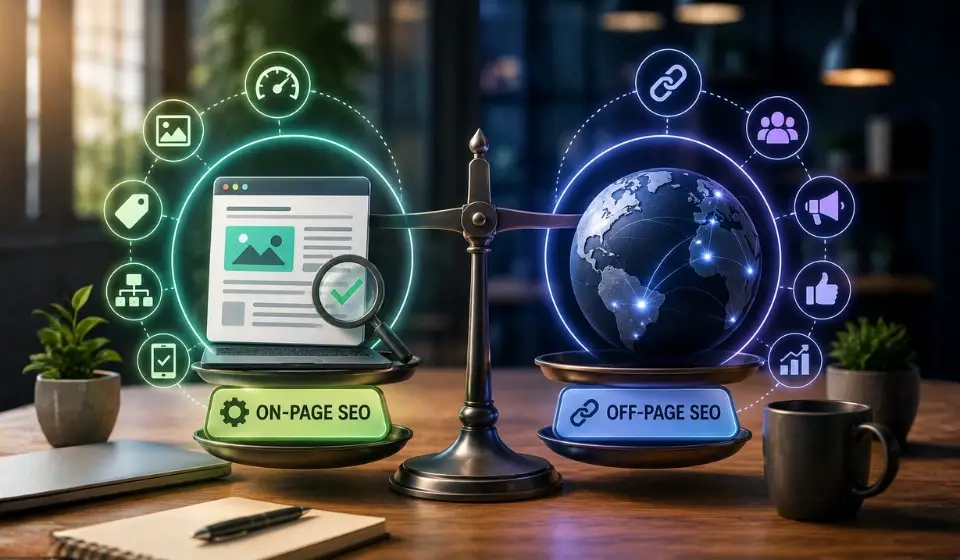
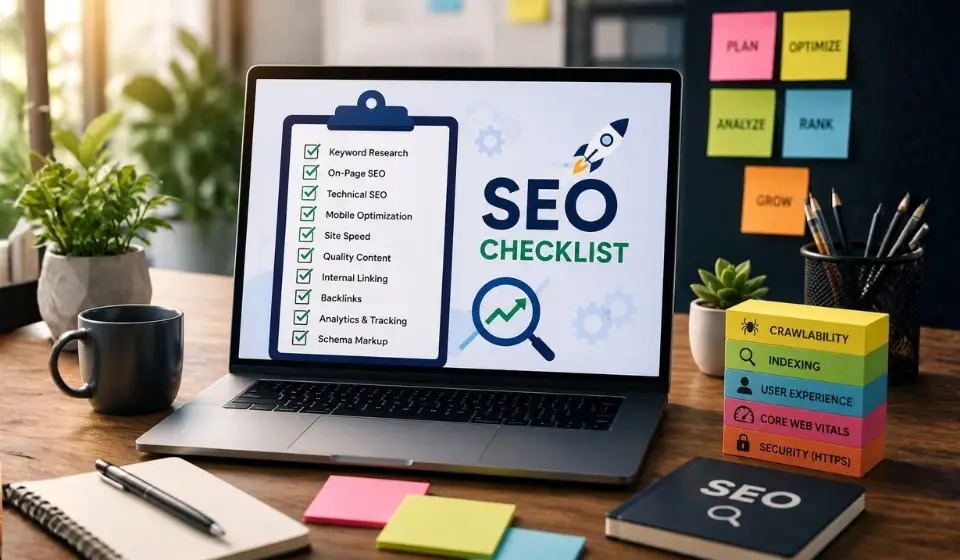
AI has changed how search optimization works as well. Instead of relying purely on keyword stuffing, modern SEO looks at search intent, a shift AI has made possible through natural language processing. Some notable applications include:
Identifying keyword opportunities based on real search intent, not just volume
Analyzing competitor content gaps
Optimizing for voice search, which continues to grow as more people use smart assistants
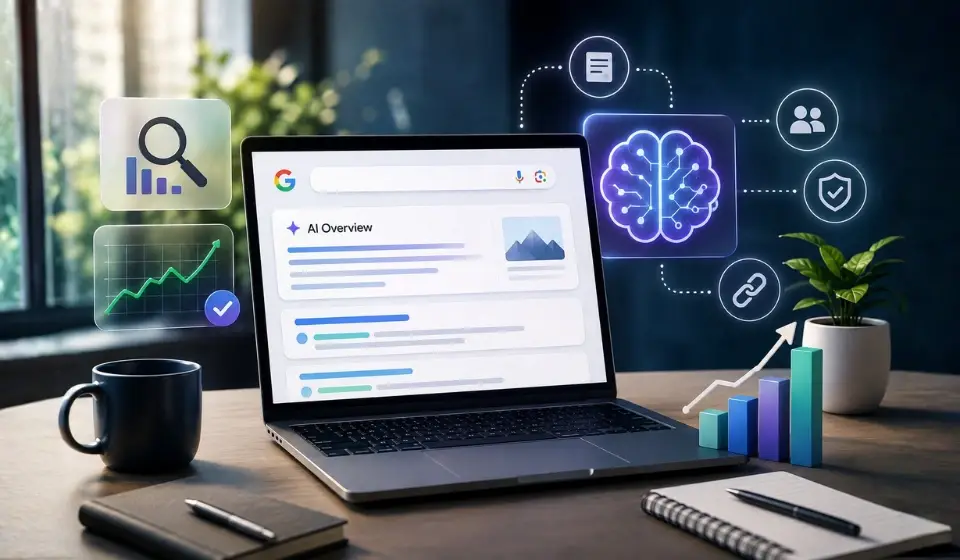
As voice search and conversational queries become more common, businesses using AI in digital marketing are better positioned to stay visible in search results.
Key Takeaways
Artificial intelligence has moved from an experimental tool to a core part of how successful marketing teams operate. To summarize the biggest benefits of AI in digital marketing covered in this blog:
AI enables highly personalized customer experiences that boost engagement and loyalty.
Data analysis and predictive analytics lead to smarter, faster decision making.
Automation improves efficiency and reduces the manual workload on marketing teams.
AI supports stronger content creation and more effective SEO strategies.
The rise of artificial intelligence is not slowing down, and the businesses that adapt early will have a clear advantage over those that wait. Whether you are just starting to explore AI marketing trends or already integrating tools into your workflow, the key is to see AI as a partner in strategy, not a replacement for the human insight that still drives great marketing.