SEO Checklist For New Websites In 2026

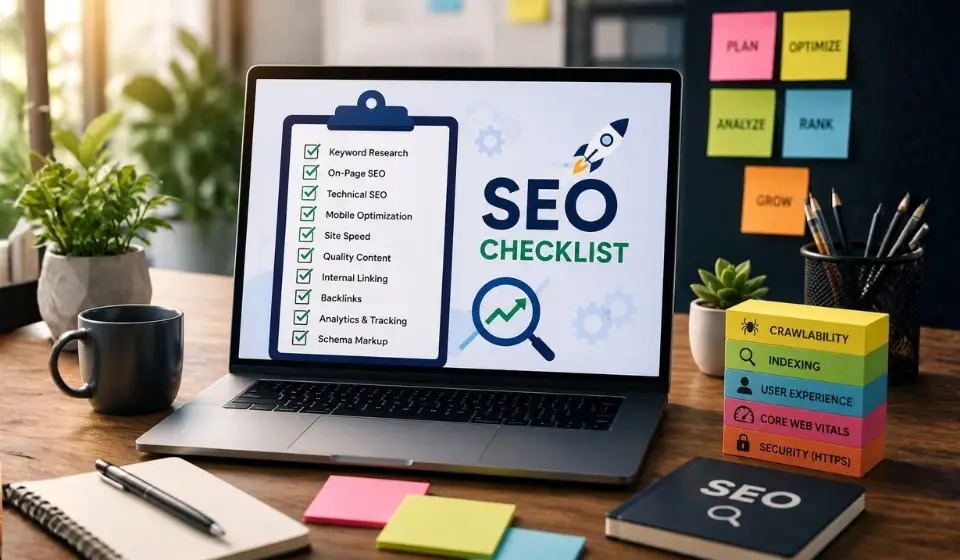
Launching a new website is exciting, but getting it online is only the beginning. If search engine optimisation is left until months after launch, technical problems, weak content structures, and missed ranking opportunities can become harder to correct. Starting SEO from day one gives search engines a clearer understanding of your website while creating a stronger experience for users. A practical SEO checklist for new website launches can help businesses prioritise what matters instead of trying random optimisation tactics. From technical setup and keyword research to on-page optimisation, local SEO, and authority building, this guide covers the essential steps new websites should follow in 2026 to establish a strong foundation for sustainable organic growth.
Technical SEO Foundations To Set Up First
Technical SEO determines whether search engines can efficiently access, understand, and index your website. Even excellent content may struggle to rank when technical barriers prevent Google from properly discovering it.
A technical SEO checklist should therefore be one of the first priorities before and immediately after launching a new website.
Site Structure, Indexing, & Crawlability
Start with a logical website architecture. Important pages should be easy to reach from the homepage and organised into clear categories based on services, products, locations, or topics.
Keep URLs descriptive and straightforward. Avoid unnecessarily complicated structures filled with numbers, parameters, or irrelevant folders.
Crawlability and indexability also need attention. Check that important pages are not accidentally blocked through robots directives or noindex tags. Development websites commonly use restrictions to prevent premature indexing, and forgetting to remove them at launch can stop an entire website from appearing in search results.
Google Search Console can help monitor indexing, crawling problems, and how Google discovers your pages.
Core Technical Setup (SSL, XML Sitemap, Robots.txt)
Every new website should use HTTPS with a correctly configured SSL certificate. Security is important for users and prevents browsers from displaying warnings that can damage trust.
An XML sitemap should list important indexable URLs and be submitted through Google Search Console. This gives search engines another pathway for discovering pages, particularly on new domains with limited external links.
The robots.txt file should also be reviewed carefully. It can guide crawlers away from areas they do not need to access, but incorrect rules can unintentionally block valuable content.
Other early checks include canonical tags, redirects, broken links, mobile usability, page speed, and Core Web Vitals.
Keyword Research & Content Planning Essentials
Keyword research helps determine what your potential customers actually search for and what information they expect to find. Without it, a new website can end up targeting phrases that are either too competitive or irrelevant to its audience.
A strong search engine optimization checklist should connect keyword research directly with content planning.
Identifying The Right Keywords For A New Site
New domains generally have limited authority, making highly competitive keywords difficult to rank for immediately. Instead of targeting only broad, high-volume terms, identify specific searches with achievable competition and clear relevance.
Long-tail keywords can be particularly useful because they often communicate stronger intent. For example, a specific service and location combination may attract fewer searches than a broad industry term but generate more relevant visitors.
Search volume should never be considered in isolation. Review competition, search intent, relevance, and commercial value before selecting targets.
Each important page should also have a clear primary topic rather than several pages competing for the same keyword.
Mapping Content To The Buyer Journey
Not every visitor is ready to make an enquiry or purchase immediately. Some are researching a problem, others are comparing solutions, and some are actively choosing a provider.
Plan content around these different stages. Informational blogs can answer early questions, detailed service pages can explain available solutions, and case studies or FAQs can support users evaluating their options.
Building this structure early creates room for future content without turning the website into a collection of disconnected pages.
On-Page SEO Best Practices For New Websites
On-page optimisation helps search engines understand individual pages while making information clearer for visitors. Establishing consistent standards from the beginning is significantly easier than correcting hundreds of poorly optimised pages later.
An on page SEO checklist should cover both visible content and supporting HTML elements.
Optimising Titles, Meta Descriptions, & Headings
Every important page should have a unique and descriptive title that accurately communicates its subject. Incorporate the primary keyword naturally without forcing multiple variations into the title.
Meta descriptions should summarise the page and encourage relevant users to click. While they do not guarantee higher rankings, useful descriptions can improve how a result is presented to searchers.
Headings should create a logical hierarchy. Use one clear H1 for the primary page topic, followed by H2 and H3 headings to organise supporting information.
Avoid duplicate pages and thin content. Every indexable page should have a genuine purpose and provide enough useful information to satisfy its intended search query.
Internal Linking & Site Navigation
Internal links help users discover relevant pages while showing search engines how different parts of the website connect.
Link naturally between related services, products, articles, and supporting resources. Descriptive anchor text is more useful than repeatedly using vague phrases such as “click here”.
Navigation should also remain simple. Core pages should be accessible without forcing visitors through multiple unnecessary levels.
Breadcrumbs can further clarify hierarchy, particularly for larger websites with multiple categories and subcategories.
Local SEO & Google Business Profile Setup
Businesses serving specific geographic areas should consider local SEO during launch rather than waiting until the website starts ranking organically.
A complete website SEO checklist for a local business should include both website optimisation and accurate information across external local platforms.
Setting Up And Optimising Google Business Profile
Create or claim your Google Business Profile and ensure the business name, address, phone number, website, opening hours, and other essential details are accurate.
Choose categories that genuinely represent the business rather than adding loosely related options in an attempt to increase visibility. Complete relevant profile sections, add quality images, and keep important information updated.
Customer reviews can also strengthen credibility. Encourage genuine customers to leave feedback and respond professionally to reviews, including negative ones.
Regular activity can help ensure the profile remains useful and current for potential customers.
Local Citations & NAP Consistency
NAP refers to name, address, and phone number. These details should remain consistent across the business website, Google Business Profile, reputable directories, and other important listings.
Small inconsistencies can accumulate over time, especially when a business changes its address, phone number, or branding.
Establishing accurate information from the beginning makes local presence easier to manage and reduces confusion for customers and search platforms later.
Off-Page SEO & Building Early Authority
New websites rarely have strong external authority immediately. Building trust takes time, which is why off-page SEO should focus on sustainable activities rather than quick ranking promises.
A sensible off page optimization checklist prioritises relevance, credibility, and genuine relationships.
Earning Early Backlinks The Right Way
Backlinks from reputable and relevant websites can help search engines discover a new domain and provide useful authority signals.
New businesses can pursue links through industry associations, partnerships, supplier relationships, useful resources, digital PR, guest contributions, and genuinely newsworthy company developments.
Creating original research, detailed guides, useful tools, or valuable resources can also give other websites reasons to reference your content.
Avoid purchasing large volumes of low-quality links or participating in manipulative link schemes. Short-term shortcuts can create long-term SEO risks and rarely build genuine authority.
Building Brand Signals Beyond Links
Authority is not built through backlinks alone. A consistent digital presence can help establish the legitimacy and visibility of a new brand.
Maintain relevant social profiles, publish useful content, participate in industry conversations, seek genuine customer reviews, and work towards earning mentions on reputable websites.
Consistent branding and accurate company information across digital channels also make it easier for customers and search engines to understand who the organisation is and what it offers.
These activities complement link building while supporting broader marketing objectives such as awareness, trust, and customer engagement.
Key Takeaways
A successful website launch requires more than attractive design and functional pages. SEO should begin with a technically accessible website, logical architecture, realistic keyword strategy, useful content, strong on-page optimisation, and clear internal linking. Local businesses should establish accurate Google Business Profile information and consistent citations, while every new website should gradually build external authority through legitimate links, mentions, and brand activity. Following a structured SEO checklist from day one can prevent avoidable problems and provide a stronger foundation for organic growth. Most importantly, SEO should not be treated as a one-time launch task. Search behaviour, competitors, algorithms, and your website will continue to change, making ongoing monitoring, optimisation, content development, and technical maintenance essential for sustainable search performance.
Latest Post

Reasons Why Your Website Isn’t Ranking On Google

Reasons Why Your Google Ads Aren’t Converting
Technical SEO Mistakes To Watch Out For

Common Social Media Marketing Mistakes

Website Security Best Practices Every Business Should Follow

Organic Vs Paid Social Media: A Complete Comparison Guide
On-Page SEO Vs Off-Page SEO: What’s The Difference

The Importance Of E-E-A-T In Modern SEO
SEO Checklist For New Websites In 2026

Social Media Trends Businesses Should Follow
How To Optimize For AI Search & Rank Higher In Google AI Overviews