On-Page SEO Vs Off-Page SEO: What’s The Difference

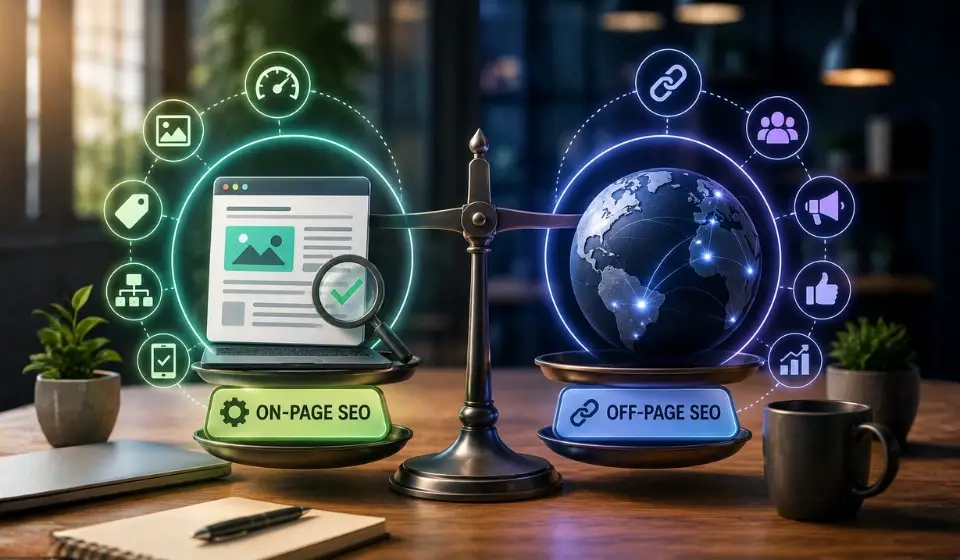
Successful SEO is rarely the result of improving one element of a website. Search engines consider signals found directly on your pages as well as signals coming from other websites and online sources. This creates two important areas of optimisation: on-page SEO and off-page SEO. Understanding on-page SEO vs off-page SEO helps businesses decide where to invest their time and how different optimisation activities contribute to organic visibility. On-page SEO primarily focuses on relevance, content, structure, and user experience, while off-page SEO focuses on authority, reputation, and external validation. Neither works particularly well in isolation. This guide explains what each approach involves, their major differences, and how combining both can create a stronger and more sustainable SEO strategy.
What Is On-Page SEO?
On-page SEO refers to optimisation activities performed directly on a website to improve its relevance, usability, and search visibility. These are generally elements a website owner or SEO team can directly control.
Understanding how on-page SEO works begins with recognising that search engines need clear information about what a page covers and why it may be useful for a particular search.
Core Elements Of On-Page SEO
fy search intent, provide useful information, and incorporate relevant keywords naturally. Search engines increasingly evaluate whether content genuinely addresses what users are trying to find rather than simply counting keyword occurrences.
Page titles, meta descriptions, H1 headings, and supporting H2 and H3 headings should accurately describe the page. They also help organise information so users can scan content more easily.
Internal linking is another important consideration. Linking related pages helps visitors navigate the website and gives search engines additional context about relationships between topics.
Other on page SEO best practices include using descriptive URLs, optimising images, improving mobile usability, maintaining page speed, avoiding duplicate content, and ensuring important pages can be crawled and indexed.
Why On-Page SEO Is The Starting Point
On-page optimisation is generally the logical starting point because businesses have direct control over these elements. Before attempting to build authority externally, the website itself needs to provide something worth discovering.
Search engines use page content and structure to understand relevance. If a service page does not clearly explain the service, its benefits, and the questions potential customers have, external authority alone may not solve the problem.
Strong on-page SEO also improves user experience. Visitors should be able to understand a page quickly, navigate easily, and find information without unnecessary friction.
What Is Off-Page SEO?
Off-page SEO includes activities and signals occurring outside your own website that can contribute to its reputation and authority.
While on-page optimisation tells search engines what you say about your business or content, off-page signals can provide independent indications of how other websites, organisations, and audiences perceive it.
Core Elements Of Off-Page SEO
Backlinks are among the best-known components of off-page SEO. When a reputable and relevant website links to another website, that link can act as a signal of recognition or usefulness.
However, quality is more important than simply accumulating links. A relevant editorial link from a respected industry publication can carry considerably more value than numerous links from unrelated or low-quality websites.
Brand mentions, digital PR, citations, reviews, industry partnerships, and third-party coverage can also contribute to an organisation’s wider digital reputation.
Social media activity is not a direct replacement for link building, but it can increase content distribution, brand awareness, and opportunities for people to discover and reference a business.
Why Off-Page SEO Reflects External Trust
A business can describe itself as authoritative, but search engines also need signals beyond what appears on its own website.
External recognition provides another perspective. Relevant backlinks, media coverage, positive reviews, citations, and genuine brand mentions can indicate that others recognise the organisation or its content.
Understanding how off page SEO works therefore requires thinking about reputation rather than simply “building links”. Effective off-page SEO aims to create legitimate reasons for people and organisations to discuss, recommend, cite, or reference a brand.
Key Differences Between On-Page & Off-Page SEO
When comparing on-site SEO vs off-site SEO, the primary difference is where optimisation happens and how much control the website owner has.
Both contribute to organic performance, but they influence search visibility in different ways.
Control & Ownership
On-page factors are largely within your direct control. You can rewrite content, change headings, improve internal links, optimise titles, update images, or restructure pages whenever required.
Off-page factors depend much more heavily on external sources. You cannot force a reputable publication to link to your article or guarantee that customers will mention your brand positively.
This distinction is important when comparing on page optimization vs off page optimization. On-page improvements can be planned and implemented directly, while sustainable off-page growth often depends on relationships, content quality, reputation, outreach, and time.
Timeframe & Impact
On-page improvements can sometimes produce relatively quick changes because search engines can reassess a page after crawling the updated content.
For example, improving a poorly targeted title and rewriting content to better satisfy search intent may help performance once the page is recrawled.
Off-page authority generally develops over a longer period. Earning reputable backlinks, establishing brand recognition, building industry relationships, and developing a strong online reputation rarely happen immediately.
Both require patience, but their timelines can differ considerably.
How On-Page & Off-Page SEO Work Together
The question “what is difference between on page and off page seo” is useful for understanding individual tactics, but businesses should avoid treating them as competing strategies.
The strongest SEO campaigns create a relationship between valuable website content and genuine external authority.
Why Strong On-Page Content Attracts Off-Page Signals
People are more likely to reference content that provides genuine value. Detailed guides, original research, useful statistics, industry insights, practical tools, case studies, and well-explained resources can naturally create reasons for other websites to link.
Strong content can also generate social shares, media interest, discussion, and brand mentions.
This demonstrates why content quality affects more than on-page optimisation. A valuable resource can become an asset for off-page SEO because outreach becomes easier when there is something genuinely worth promoting.
Why Off-Page Authority Amplifies On-Page Efforts
A perfectly optimised page on a website with little external recognition may still struggle against established competitors.
Relevant backlinks and other authority signals can strengthen the credibility of a domain and help valuable content compete more effectively.
At the same time, backlinks cannot permanently compensate for weak pages that fail to satisfy user intent. External authority may bring users to a website, but poor content and usability can prevent those visitors from taking meaningful action.
This is why both sides need to work together.
Best Practices To Balance Both For Maximum Results
An effective SEO strategy should allocate resources according to the website’s current strengths and weaknesses. A new website may initially require significant on-page work, while an established website with strong content might need greater attention to external authority.
Following both on-page and off page SEO best practices creates a more balanced foundation.
Building A Cohesive SEO Strategy
Begin by auditing the website’s content, technical condition, keyword targeting, internal linking, and user experience. Address major weaknesses before investing heavily in promotion.
Once strong pages exist, develop realistic authority-building activities. These may include digital PR, outreach, industry partnerships, useful resources, guest contributions, local citations, and campaigns designed to earn relevant mentions.
Performance should also be reviewed regularly. Track organic rankings, traffic, conversions, backlinks, referring domains, content engagement, and technical issues rather than relying on one metric.
Avoiding Common Imbalances
One common mistake is investing heavily in backlinks while neglecting content quality. This may create authority without providing search engines or users with sufficiently useful pages.
The opposite problem is publishing large volumes of optimised content without developing any external reputation. Even excellent resources can struggle in competitive markets when established competitors have stronger authority.
Avoid treating either area as a one-time project. Content needs updating, technical issues emerge, competitors publish new resources, and backlink profiles change.
The right balance should also reflect business objectives. SEO should ultimately attract relevant audiences and contribute to enquiries, sales, leads, or other meaningful outcomes rather than focusing solely on ranking positions.
Key Takeaways
On-page and off-page SEO perform different but complementary roles. On-page SEO helps search engines understand the relevance, quality, structure, and usability of your website, while off-page SEO provides external signals of authority, credibility, and reputation. Businesses have greater direct control over on-page optimisation, while off-page authority generally requires more time and depends on earning recognition from external sources. Strong content can naturally support backlinks and mentions, while external authority can help well-optimised pages compete more effectively. Rather than choosing one approach over the other, businesses should continually improve their website while building genuine authority around it. A balanced strategy creates a stronger foundation for sustainable rankings, relevant organic traffic, and long-term search performance.
Latest Post
Reasons Why Your Website Isn’t Ranking On Google

Reasons Why Your Google Ads Aren’t Converting

Technical SEO Mistakes To Watch Out For
Common Social Media Marketing Mistakes

Website Security Best Practices Every Business Should Follow
Organic Vs Paid Social Media: A Complete Comparison Guide
On-Page SEO Vs Off-Page SEO: What’s The Difference

The Importance Of E-E-A-T In Modern SEO
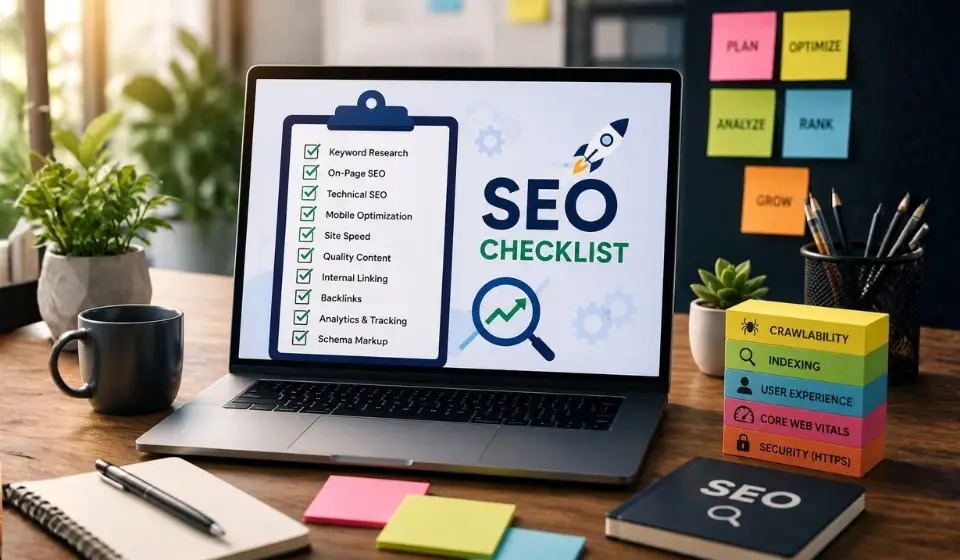
SEO Checklist For New Websites In 2026

Social Media Trends Businesses Should Follow
How To Optimize For AI Search & Rank Higher In Google AI Overviews